

Hands-On Heritage: Traditional Russian Crafts in Our Classroom
Create traditional Russian crafts, learn folk art techniques, and discover the stories behind matryoshka dolls, khokhloma painting, and other cultural treasures.
There's something magical about watching a child's face light up as they paint their first matryoshka doll or carefully craft a traditional Russian ornament. At Russian Language & Arts, folk arts and crafts aren't just fun activities—they're essential tools for cultural transmission, language development, and building lasting connections to Russian heritage.
The Philosophy Behind Our Crafts Program
Traditional Russian crafts carry centuries of history and meaning. Each pattern, color choice, and technique tells a story about Russian life, values, and aesthetics. When children create these crafts with their own hands, they don't just learn about Russian culture—they experience it viscerally. The vocabulary they learn (кисточка - brush, узор - pattern, роспись - painting) becomes connected to physical actions and beautiful objects they've created.
Matryoshka Dolls: Nesting Stories
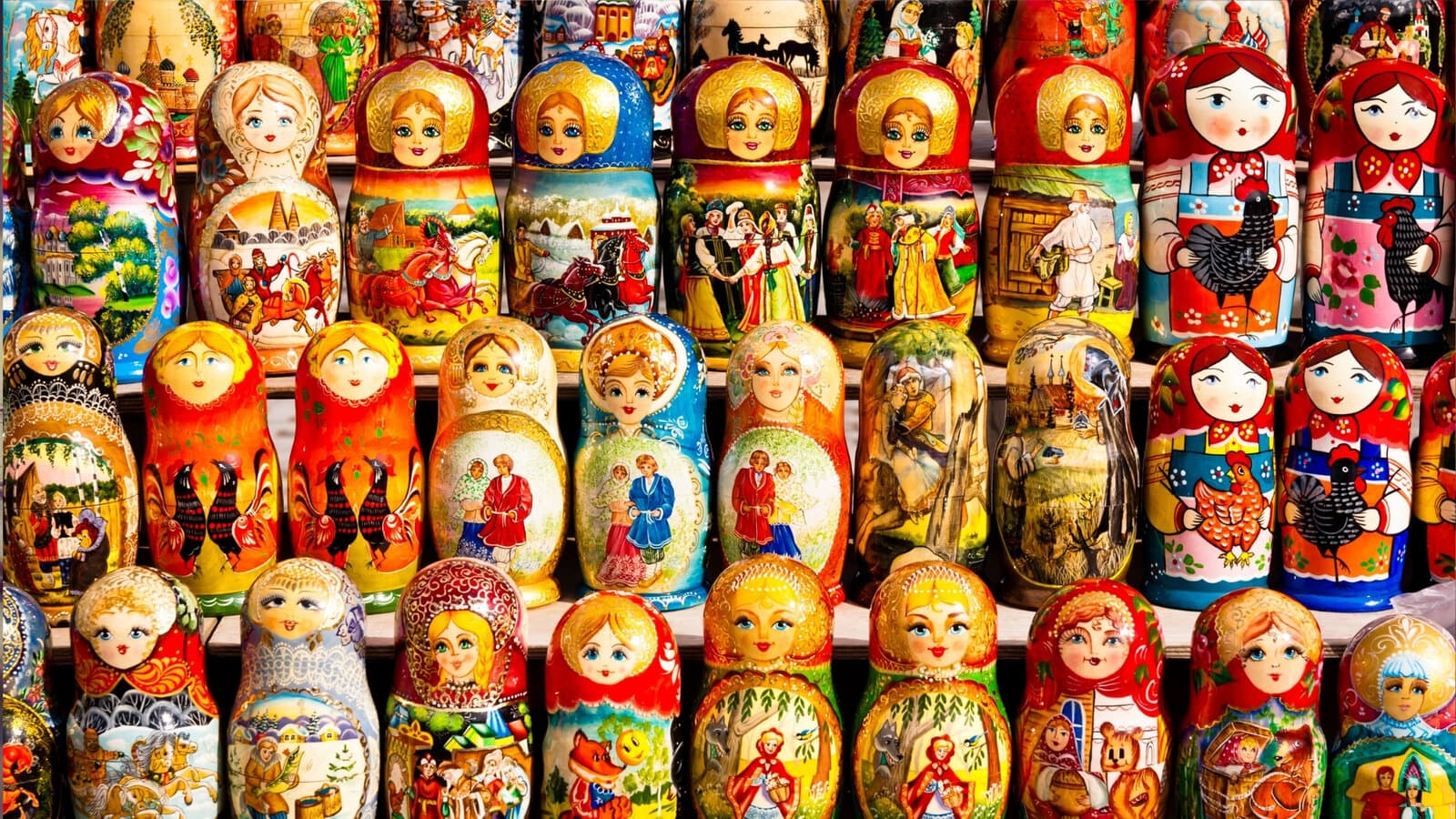
Perhaps no craft is more iconic than the матрёшка (matryoshka) nesting doll. Our students learn that these dolls, while seemingly ancient, were only created in the late 1800s, blending Russian and Japanese influences. Each child receives an unpainted wooden matryoshka set to design and paint.
The process is detailed: first, students sketch their designs, choosing whether to create a traditional peasant girl, a fairy tale theme, or a modern interpretation. They learn about color symbolism in Russian folk art—red for beauty and life, gold for wealth and sun, green for nature. Using tiny brushes, they carefully paint faces, traditional clothing patterns, and decorative elements.
The project takes several weeks, teaching patience and attention to detail. But the pride students feel when they complete their unique matryoshka set is immeasurable. Many keep these dolls for years, and parents report they've become family treasures.
Khokhloma: Golden Russian Beauty
Хохлома painting with its distinctive gold, red, and black color scheme is one of Russia's most recognizable art forms. Students learn the history of this craft from the Nizhny Novgorod region and the technical secrets that give khokhloma its golden glow (historically achieved through a complex process involving silver powder and linseed oil).
We provide wooden spoons, boxes, and plates for students to decorate. They practice the characteristic flowing berries, leaves, and grass-like strokes. The challenge of mastering the curved brush techniques improves their fine motor control while teaching them about traditional Russian design principles.
Painted Wooden Toys (Dymkovo)
The whimsical дымковская игрушка (Dymkovo toys) from the Kirov region offer younger students an accessible entry into Russian folk art. These clay or wooden toys—often depicting ladies in colorful dresses, roosters, or horses—are painted in bright, geometric patterns.
Children love the bold colors and playful designs. They learn that these toys were traditionally made for spring festivals and that each artisan's work is unique. Our students create their own Dymkovo-style ornaments, learning color theory and pattern-making while connecting to centuries-old traditions.
Traditional Ornaments and Decorations
Throughout the year, students create seasonal crafts rooted in Russian tradition:
- Winter: Paper snowflakes (снежинки) with intricate patterns, traditional ornaments for the New Year tree - Spring: Масленица sun symbols, paper flowers for spring festivals - Easter: Decorated pysanky-style eggs using wax-resist techniques, traditional egg stands - Autumn: Harvest decorations, leaf-pattern printing
Each craft comes with historical context and cultural significance, taught in Russian to build thematic vocabulary.
Gzhel: Blue and White Elegance
The distinctive blue-on-white гжель pottery style becomes a study in contrast and delicacy. Students learn how this craft evolved in the villages near Moscow and practice the characteristic floral and geometric patterns. They decorate ceramic pieces or paper plates, mastering the gradations from deep blue to pale azure that characterize authentic gzhel.
Embroidery and Textile Arts
Older students explore Russian embroidery traditions, learning basic stitches used in traditional costumes and household linens. They create small samplers featuring geometric patterns from northern Russian embroidery or floral motifs from Ukrainian influences. This craft connects them to generations of women who preserved culture and beauty through needlework.
Cultural Storytelling Through Craft
Each craft session includes storytelling. Students hear about the artisans who developed these techniques, the regions where they originated, and how these crafts fit into daily Russian life. They learn proverbs and songs related to the crafts, building vocabulary and cultural knowledge simultaneously.
Exhibition and Family Pride
At the end of each semester, we hold a folk arts exhibition where students display their creations. Parents are always amazed at the quality and authenticity of the work. Many grandparents attend, sharing their own memories of similar crafts from their childhood in Russia. These moments create powerful intergenerational bridges.
Beyond the Classroom
The impact extends into homes. Parents report that their children now notice Russian crafts in stores and museums, explaining the techniques to siblings and friends. Some students have continued creating Russian folk art at home, developing genuine hobbies that keep them connected to their heritage.
Skills for Life
Beyond cultural connection, these crafts teach valuable skills: patience, attention to detail, hand-eye coordination, planning and executing complex projects, and artistic expression. Students learn that mastery takes practice and that mistakes are part of the creative process.
Preserving Living Traditions
Many traditional Russian crafts are endangered art forms. By teaching them to the next generation, we're not just educating children—we're preserving cultural heritage. Some of our students have become so skilled that they've taught younger classes, taking pride in passing on what they've learned.
At Russian Language & Arts, when a child holds a matryoshka doll they've painted or an ornament they've crafted in traditional style, they're holding a tangible piece of their heritage. These beautiful objects become conversation starters, sources of pride, and lasting connections to Russian culture.
FAQ